
Celebrating the Green Power of Plants in Advancing Medicine: PPSSC Presents the “Cell and Cancer Research Elite Award” to Dr. Choun-Sea Lin of Academia Sinica(2025.05)
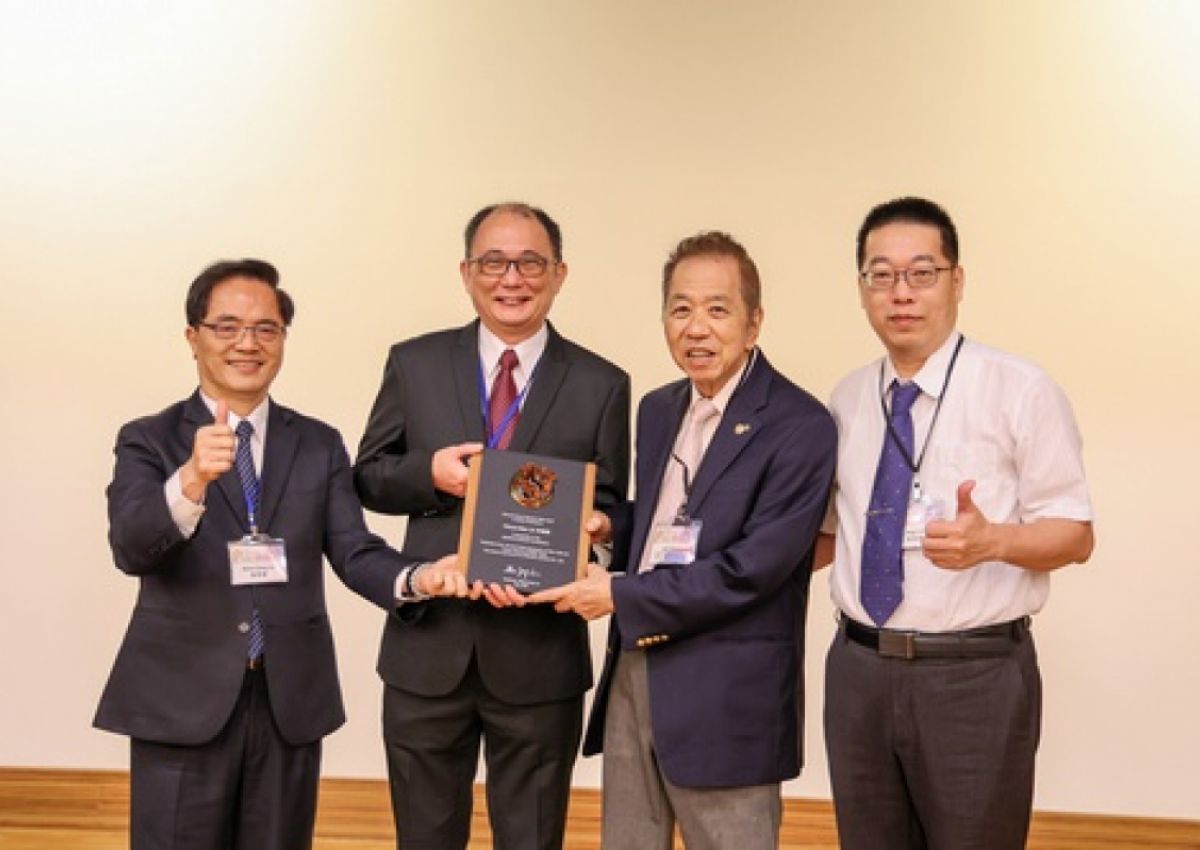
The 17th Pan Pacific Symposium on Stem Cells and Cancer Research (PPSSC) conferred the “Cell and Cancer Research Elite Award” on the 25th, honoring Dr. Choun-Sea Lin of the Agricultural Biotechnology Research Center, Academia Sinica. Dr. Lin established a protoplast regeneration platform for Salvia miltiorrhiza (danshen), enhancing its bioactive constituents and successfully regenerating plants through plant stem cell–based approaches. The concept of a “cell-based pharmaceutical plant” can serve as a crucial foundation for medicinal plant research, sustainable cultivation, and drug development, with further potential for clinical application.
PPSSC (Pan Pacific Symposium on Stem Cells and Cancer Research) began presenting the “Cell and Cancer Research Elite Award” in 2023 to recognize individuals who have made outstanding contributions to innovative research and technologies in stem cell and cancer studies. The inaugural award in 2023 was presented to Dr. Shinsuke Yoshida, who applied induced pluripotent stem cells (iPSCs) in multiple clinical trials. The 2024 recipient was Academician Ming-Chih Hong, President of China Medical University, whose work has brought hope to patients with breast cancer. In 2025, the award was presented to Dr. Choun-Sea Lin of the Agricultural Biotechnology Research Center, Academia Sinica. Prior to the second-day program of PPSSC on the 25th, the award was jointly presented by Mr. Hsing Chiang, founder of Stansil Biomedical Technology (a long-time sponsor of PPSSC), and Dr. Hsin-Jung Lin, Superintendent of Hualien Tzu Chi Hospital and Chair of the Symposium.
Dr. Lin has collaborated with the Innovation and Research & Development Center of the Tzu Chi Medical Foundation and Hualien Tzu Chi Hospital to advance research on plant stem cells. Their work focuses on establishing a “protoplast-to-plant” regeneration platform for danshen. Using non-transgenic CRISPR technology, the team achieved highly efficient gene editing in protoplasts and, through newly developed plant regeneration protocols, obtained precision crops without the need for hybridization. This approach not only increases the content of bioactive compounds—levels of tanshinones and salvianolic acids were reported to be 30% higher than those in the original plants—but also significantly expands the potential of plant clonal propagation and precise gene editing in medicinal herb species.
Dr. Lin noted that he is a plant regeneration researcher specializing in tissue culture techniques. Before collaborating with Tzu Chi, he had primarily focused on horticultural cultivation and how to improve plant growth, knowing very little about plant metabolites or how to enhance plant production of components that promote human health.
Dr. Lin also explained that many people are unfamiliar with plant regeneration technologies. Unlike animals, a single plant cell can regenerate into a whole plant—much like how new shoots can sprout from a cut tree trunk. “This is not only a scientific miracle, but also critically important for agricultural mass production. It enables the cloning of large numbers of plants with identical genetics and can also be used to eliminate viral infections and improve crop health,” Dr. Lin said. He added that the research team performed genome sequencing analyses on regenerated plants of danshen, tomato, and Chinese kale. The results showed that, compared with other transplantation methods, regenerated plants exhibited similar or even lower mutation rates, and their chromosomes remained highly stable—evidence that the protoplast-based editing workflow is reliable.
Ms. Ching-An Liu, Deputy Chief Technology Officer of the Innovation and R&D Center of the Tzu Chi Medical Foundation, pointed out two major highlights of Dr. Lin’s research. First, it adopts a non-transgenic approach and edits native species without introducing foreign genetic material, while achieving higher levels of active compounds than the original plants after editing. Second, plant-derived stem cells may help avoid immune reactions and side effects associated with animal-derived stem cells, offering strong advantages for clinical translation and for the development of health foods.
Dr. Lin’s award also echoes a key theme of this year’s PPSSC: “Emerging Green Frontier Research: Regeneration Using Plant Stem Cells.” In addition to danshen, Professor Lin and the Tzu Chi innovation R&D team are also conducting research on mugwort and Angelica species. Dr. Hsin-Jung Lin, Symposium Chair and Superintendent of Hualien Tzu Chi Hospital, noted that during the COVID-19 pandemic, under the guidance of Dharma Master Cheng Yen, Hualien Tzu Chi Hospital developed the Jing Si Herbal Beverage using Chinese medicinal herbs and achieved very positive results. The hospital subsequently expanded research to other medicinal herbs, emphasizing the principle that “for every illness, there is a remedy.” However, most cell and regenerative medicine research has traditionally centered on animal stem cells. Dharma Master Cheng Yen’s reminder that “plants also have stem cells” has been an important inspiration and has further motivated the Hualien Tzu Chi research team to advance plant-based studies. As a specialist in neurology, Dr. Lin expressed hope that these stem cell research outcomes can be translated into clinical applications for patients with movement disorders—such as Parkinson’s disease, dementia, and spinocerebellar ataxia—as well as for cancer, bringing patients more opportunities for recovery.
Article source: https://hlm.tzuchi.com.tw/home/index.php/news/reports/ppssc