
2026-05-05
Turning Citrus Waste into Gold: Our Center Team Identifies a Citrus Essential Oil Component That Protects Neuronal Cells
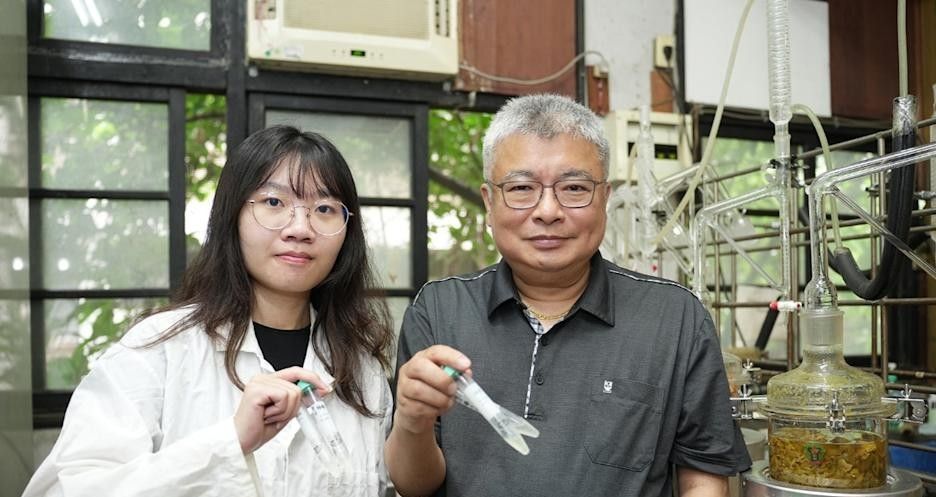
A research team led by our Center team member Sheng-Yang Wang, Dean of the Academy of Circular Economy, together with Dr. Mo-Rong Xu and Ching-Yi Tsai, has become the first to systematically elucidate the neuroprotective mechanisms of active components in citrus essential oils from the perspective of mitochondrial bioenergetics, opening up a new direction for the application of natural products.
Dean Wang pointed out that during the juicing and processing of citrus fruits, approximately 50% of the fruit is treated as waste, primarily in the form of peels. This not only creates an environmental burden but also increases disposal costs. Through essential oil extraction and bioactivity analysis, the research team successfully transformed low-value citrus peels into natural functional molecules with biomedical potential, putting into practice the core circular economy concept of converting low-value waste into high-value bioactive materials.
Dean Wang explained that mitochondria function like the “power plants” of cells, generating ATP to supply the energy required for normal biological functions. When mitochondrial function is impaired, insufficient ATP production leads to cellular energy deficiency. This is particularly detrimental to neurons, which have high energy demands, and may, over time, be associated with health conditions such as neurodegenerative diseases.
Using a neuronal cell model to simulate glutamate-induced neuronal injury, the study further found that γ-terpinene exerts multiple key effects. It restores mitochondrial function, enhances ATP production to effectively “recharge” cells, reduces oxidative stress and cellular damage, and promotes the production of dopamine and norepinephrine. Collectively, these effects contribute to the restoration of energy metabolism and the protection of neuronal cells.
Dean Wang emphasized that the key value of this study lies not only in the discovery of a natural bioactive compound, but also in the establishment of a new scientific framework for the circular economy: moving beyond conventional waste reuse toward function-oriented resource upcycling based on bioenergetic value. He further noted that the study demonstrates substantial potential for interdisciplinary applications. In the future, its findings may contribute to the development of functional foods and nutritional supplements; preventive strategies for neurodegenerative diseases such as Alzheimer’s disease and Parkinson’s disease; technologies for the high-value utilization of agricultural by-products; forest therapy and natural essential oil applications; and precision health agriculture and low-carbon production systems. The study highlights the promising development potential of integrating circular economy principles with health technology.
Article source: https://tw.news.yahoo.com/柑橘廢棄物變黃金-興大研究-精油成分修復保護神經細胞-070319703.html
News
2026-04-10
Medicinal Plants Lecture
2026-03-27